
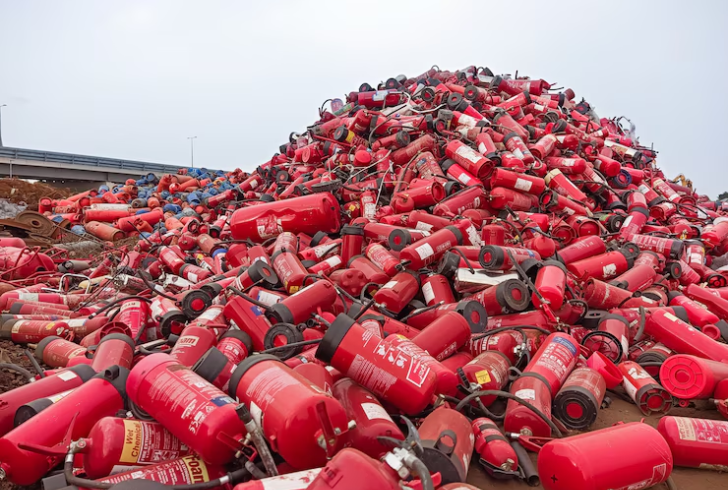
Fire extinguishers don’t last forever. Whether your extinguisher is expired, damaged, discharged, or failed inspection, it’s important to dispose of it properly. Many people assume extinguishers can simply be thrown in the garbage or dropped into scrap metal bins, but because they’re pressurized devices containing chemicals or compressed gas, improper disposal can create safety and environmental risks.
This is especially true for ABC dry chemical extinguishers and CO₂ extinguishers, which must be depressurized and processed correctly before recycling or disposal.
If you’re located in Ottawa and wondering what to do with old extinguishers, this guide breaks down the proper process and what actually happens after a disposal facility takes them in.
Why Fire Extinguishers Can’t Go in Regular Garbage
Fire extinguishers are considered pressurized vessels. Even empty units may still contain residual pressure or extinguishing agents.
Improper disposal can lead to:
Cylinder rupture during crushing or compaction
Chemical release into waste streams
Safety hazards for sanitation workers
Environmental contamination
The Government of Canada recommends that hazardous or pressurized materials be handled through approved disposal or recycling channels.
How ABC Fire Extinguishers Are Disposed Of
ABC extinguishers contain a dry chemical powder, usually monoammonium phosphate, used to interrupt the chemical reaction of a fire.
When an ABC extinguisher is brought to a disposal facility:
The extinguisher is inspected and depressurized safely
Remaining chemical powder is removed
Usable components may be salvaged for parts or training
The steel cylinder is recycled as scrap metal
Powder may be repurposed for controlled training applications where permitted
Some facilities also use expired extinguishers for:
Employee training exercises
Demonstration units
Internal servicing practice
Because the powder is corrosive and messy, proper handling is important during disposal.
How CO₂ Fire Extinguishers Are Disposed Of
CO₂ extinguishers are different because they contain compressed carbon dioxide instead of dry chemical powder.
When disposed of properly:
Remaining CO₂ pressure is safely vented or recovered
Valves and hardware are removed
Cylinders are inspected for possible reuse or recycling
Steel or aluminum bodies are sent for metal recycling
In some cases, cylinders that are still structurally sound may qualify for:
Hydro testing
Refurbishment
Re-certification for future use
If a CO₂ cylinder fails inspection or hydro testing, it is condemned and recycled.
You can learn more about hydro testing requirements here: https://www.rapidco2.ca/blog/what-is-co2-hydro-testing-and-when-is-it-required
Can You Recycle Fire Extinguishers Yourself?
Technically, some municipalities allow fully depressurized extinguishers to enter metal recycling streams, but most homeowners and businesses do not have the equipment or training needed to:
Safely discharge pressure
Handle chemical agents
Confirm the cylinder is fully inert
That’s why most people choose a licensed or experienced facility to handle disposal properly.
Fire Extinguisher Disposal in Ottawa
At Rapid CO₂, based in Ottawa, Ontario, we provide disposal services for:
ABC dry chemical extinguishers
CO₂ extinguishers
Expired or damaged units
Commercial extinguisher lots
Our facility safely:
Depressurizes extinguishers
Removes extinguishing agents
Recycles usable metals
Repurposes certain units for training and parts where appropriate
Fire extinguisher disposal is available for $8.50 per unit, and extinguishers can be dropped off directly at our facility.
If you’re unsure whether your extinguisher should be serviced, hydro tested, or disposed of, we can help assess it.
For disposal inquiries, call 613-299-8412.
What To Do Next
If your extinguisher:
Has an expired hydro test date
Won’t hold pressure
Is heavily corroded
Has been discharged
Failed inspection
…it may be time for disposal or replacement.
If you’re in Ottawa, we can help determine the safest and most cost-effective next step.
You may also find these guides helpful:
Final Thoughts
Proper fire extinguisher disposal protects sanitation workers, prevents environmental contamination, and ensures pressurized cylinders are handled safely. Whether you have a single expired extinguisher at home or a batch of commercial units, using a proper disposal facility is the safest option.
Many extinguishers still have recyclable value through metal recovery, parts reuse, or training applications — but only when processed correctly.
