
Why Is My Fire Extinguisher Losing Pressure? Common Causes and Solutions
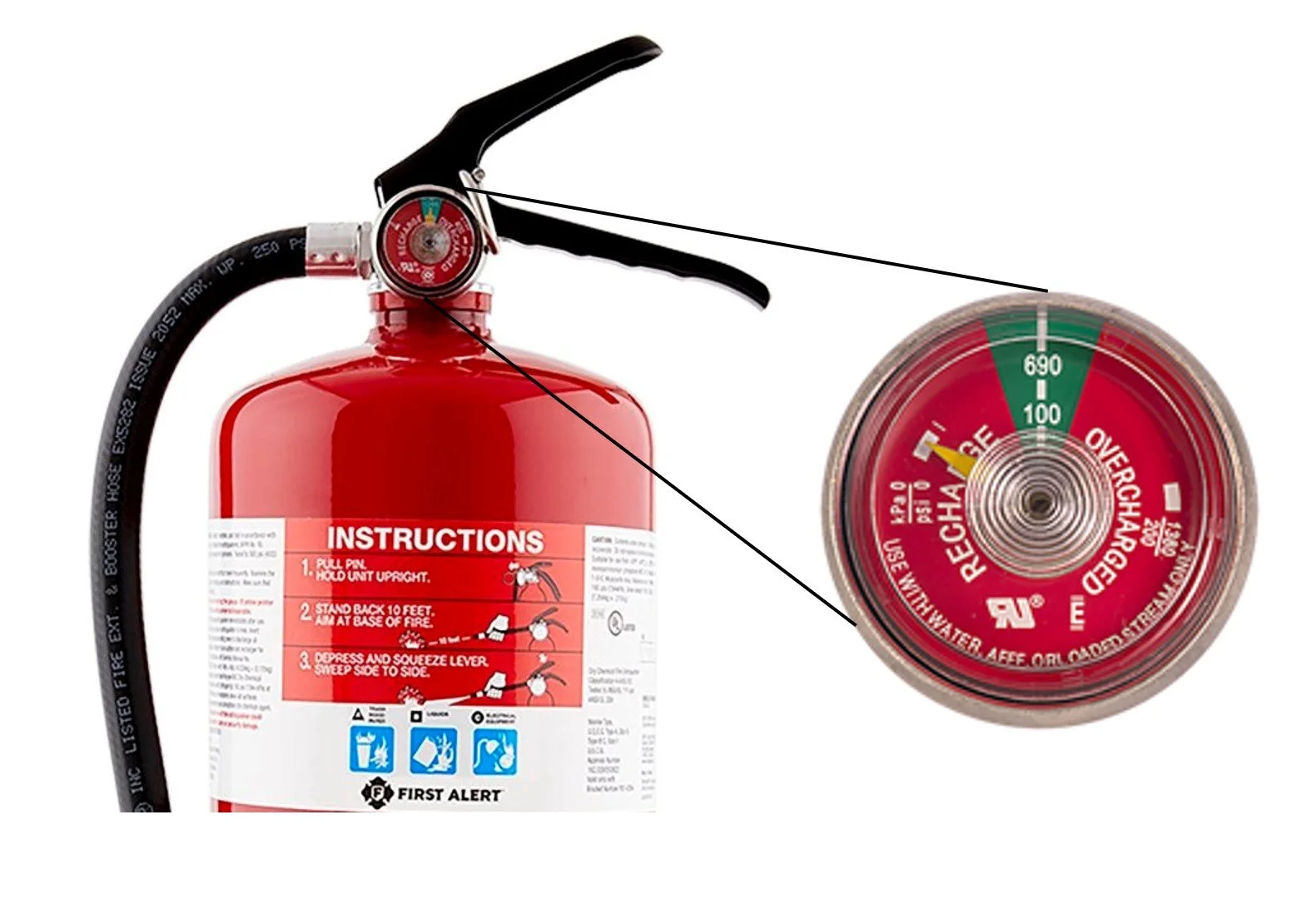
One of the most common fire extinguisher issues homeowners and business owners encounter is a pressure gauge that slowly drifts out of the green zone.
If you've noticed your fire extinguisher pressure gauge moving toward the red, you may be wondering:
Why is my fire extinguisher losing pressure?
The answer depends on the type of extinguisher, its age, and its condition. In some cases, the extinguisher can be serviced and returned to use. In others, replacement may be the safer and more cost-effective option.
In this guide, we'll explain the most common causes of pressure loss and what you should do next.
First: How Can You Tell If Your Fire Extinguisher Is Losing Pressure?
Most ABC fire extinguishers have a pressure gauge located near the handle.
The gauge typically displays:
Green = Normal operating pressure
Red (low side) = Undercharged
Red (high side) = Overcharged
If the needle has moved into the low-pressure red zone, the extinguisher may not function properly during an emergency.
For a complete guide to pressure gauges, see:
How to Check a Fire Extinguisher Pressure Gauge
Common Cause #1: Natural Pressure Loss Over Time
Even properly maintained extinguishers can experience small amounts of pressure loss over many years.
Tiny amounts of gas may slowly escape through:
Valve seals
O-rings
Internal components
This is one reason annual inspections are required for commercial fire extinguishers.
If your extinguisher is several years old and has never been serviced, normal aging may be the cause.
Common Cause #2: A Leaking Valve Assembly
The valve assembly is one of the most common failure points.
Signs of a leaking valve include:
Pressure gauge gradually dropping
Residue around the valve
Hissing sounds
Difficulty maintaining pressure after servicing
A certified technician can inspect the valve and determine whether repair or replacement is appropriate.
Common Cause #3: Previous Partial Discharge
Many people don't realize that a fire extinguisher can lose pressure after even a brief activation.
Examples include:
Testing the extinguisher
Accidental discharge
Training exercises
Children pulling the pin
Even a small discharge may reduce internal pressure enough to require servicing.
Common Cause #4: Physical Damage
Impacts, corrosion, or improper storage can compromise an extinguisher's ability to maintain pressure.
Inspect your extinguisher for:
Rust
Dents
Corrosion
Damaged handles
Damaged valve components
If physical damage is present, a technician should evaluate whether the unit remains safe to use.
Common Cause #5: Temperature Extremes
Fire extinguishers are designed to operate within specific temperature ranges.
Long-term exposure to:
Extreme heat
Freezing temperatures
Direct sunlight
can affect seals, pressure levels, and overall performance.
This is especially common in:
Unheated garages
Storage sheds
Vehicles
Outdoor storage areas
What About CO₂ Fire Extinguishers?
Unlike ABC extinguishers, most CO₂ fire extinguishers do not have pressure gauges.
Instead, they are inspected by:
Weight
Visual inspection
Hydro testing records
If a CO₂ extinguisher loses contents, it may not be immediately obvious without weighing the cylinder.
Learn more here:
What Is the Difference Between a CO₂ and an ABC Fire Extinguisher?
What Should You Do If Your Fire Extinguisher Is Losing Pressure?
If the gauge is no longer in the green zone:
Do Not Ignore It
A depressurized extinguisher may fail when you need it most.
Have It Inspected
A certified technician can determine whether the extinguisher requires:
Recharging
Repair
Hydro testing
Replacement
Don't Attempt DIY Repairs
Fire extinguishers are pressurized safety devices and should only be serviced using approved procedures and equipment.
Ottawa Fire Extinguisher Service and Inspection
If you're located in Ottawa and notice your extinguisher is losing pressure, Rapid CO₂ can help.
We provide:
Fire extinguisher inspections
ABC extinguisher servicing
CO₂ extinguisher servicing
Hydro testing
Fire extinguisher disposal
New extinguisher sales
If your extinguisher is no longer serviceable, we also offer fire extinguisher disposal for $8.50 per unit.
Call 613-299-8412 for assistance.
What To Do Next
If your extinguisher is losing pressure, you may also find these guides helpful:
What to Do If Your Fire Extinguisher Pressure Gauge Is in the Red
How to Read a Fire Extinguisher Label
When Should a Fire Extinguisher Be Replaced vs Refilled?
Final Thoughts
A fire extinguisher that is losing pressure is a warning sign that should never be ignored. While the cause may be something as simple as age-related seal wear, it could also indicate damage or a leak that makes the extinguisher unreliable during an emergency.
Regular inspections, proper storage, and prompt servicing can help ensure your extinguisher remains ready when you need it most.
