
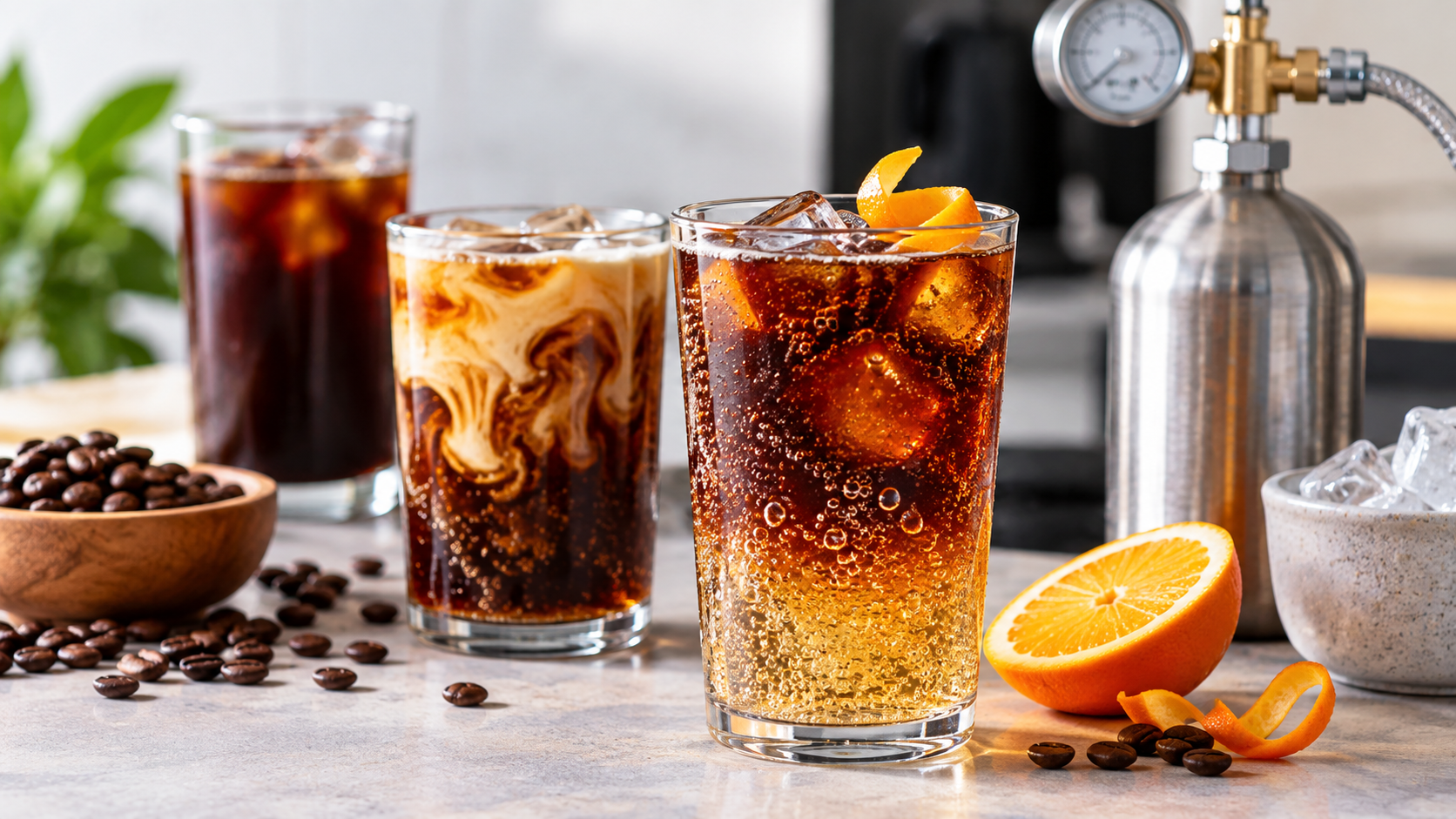
Coffee and carbonation might sound like an unusual combination, but sparkling coffee has become an interesting way to enjoy your daily caffeine in a completely different form.
From espresso soda and sparkling Americano to carbonated cold brew, adding bubbles can turn familiar coffee flavours into something lighter, colder and more refreshing.
And if you already use CO₂ at home for a kegerator, soda carbonation or another beverage system, you may be wondering: Can you use CO₂ to carbonate coffee?
The short answer is yes—with the right equipment and a suitable carbonation method.
What Is Carbonated Coffee?
Carbonated coffee is simply coffee combined with carbonated water or, in some setups, coffee that has been directly carbonated with CO₂.
There are several ways to enjoy it.
You can combine cold brew with sparkling water, pour espresso over chilled carbonated water, or experiment with a dedicated carbonation setup.
The result is a drink that combines the familiar flavour of coffee with the crisp, fizzy sensation normally associated with soda or sparkling water.
Carbonated coffee is sometimes called:
Sparkling coffee
Coffee soda
Espresso soda
Sparkling espresso
Sparkling Americano
Carbonated cold brew
One important distinction is that nitro cold brew is not the same as carbonated coffee. Nitro coffee uses nitrogen rather than CO₂, producing a smoother, creamier texture rather than the sharper carbonation associated with sparkling drinks.
Why Put CO₂ in Coffee?
Carbonation changes the way a drink feels and tastes.
The bubbles add a refreshing sensation and can make a cold coffee drink feel lighter than a traditional iced coffee. Citrus, sweetness and different coffee roasts can also work particularly well with the bright character of carbonation.
That's why sparkling coffee has found its way into coffee shops, ready-to-drink beverages and home recipes.
The basic concept is similar to other carbonated beverages: CO₂ dissolves into a liquid under pressure and creates the familiar bubbles when that pressure is released.
3 Easy Ways to Try Sparkling Coffee
You don't necessarily need a complicated setup to experiment with carbonated coffee.
1. Espresso and Sparkling Water
One of the easiest versions is a sparkling Americano.
Start with:
A shot or two of espresso
Chilled sparkling water
Ice
Lemon or orange as an optional garnish
Fill a glass with ice and chilled sparkling water, then slowly add the espresso.
The result is bright, cold and bubbly, with the espresso providing the stronger coffee flavour.
This is also a simple way to experiment before investing in any dedicated carbonation equipment.
2. Cold Brew Coffee Soda
Cold brew works particularly well as a base for a coffee soda.
Try combining:
Chilled cold brew concentrate
Sparkling water
Ice
A small amount of simple syrup, maple syrup or another sweetener
Orange or lemon peel
Start with a stronger cold brew and adjust the amount of sparkling water to your taste.
The sparkling water provides the carbonation while the cold brew supplies the coffee flavour.
3. Carbonated Coffee Using a CO₂ System
For people who already have a beverage carbonation setup, another option is using a suitable carbonation system to carbonate chilled coffee.
This is where food-grade CO₂ becomes important.
CO₂ used for beverages should be appropriate for food and beverage applications, and the equipment used to carbonate the drink must be designed for the pressures involved.
Rapid CO₂ provides food-grade CO₂ for beverage applications and refills standard CO₂ cylinders equipped with CGA-320 valves.
Does Coffee Need to Be Cold Before Carbonating?
Generally, chilled liquids are easier to carbonate effectively than warm liquids.
If you're experimenting with carbonated coffee, starting with cold coffee is a practical approach.
Cold brew is particularly convenient because it is already prepared and chilled.
If you're using espresso, allow it to cool before attempting to carbonate it directly. Another simple option is to add the espresso to chilled carbonated water instead.
Keeping the drink cold also helps preserve the carbonation after it is prepared.
What Kind of CO₂ Should You Use for Coffee?
If CO₂ is being used directly in a beverage, food-grade CO₂ is the appropriate choice.
CO₂ is used in many beverage applications, including draft beer, soda carbonation and other carbonated drinks.
Rapid CO₂ supplies clean, food-grade CO₂ for beverage applications and services CO₂ cylinders used for kegerators, soda fountains, aquariums and other applications.
The cylinder itself also matters.
Standard beverage CO₂ cylinders commonly use a CGA-320 valve, which is the connection used on many beverage carbonation systems.
If you're unsure what type of CO₂ cylinder or connection you have, check the valve and cylinder markings before purchasing an adapter, regulator or other equipment.
Can You Carbonate Cold Brew Coffee?
Yes, cold brew is one of the easiest coffee styles to experiment with when making a sparkling coffee drink.
Rather than carbonating the coffee itself, many people start by mixing cold brew with sparkling water.
This gives you more control over the final flavour and carbonation level.
For example, you could start with a small amount of cold brew and gradually add chilled sparkling water until you find the balance you like.
For a stronger coffee flavour, use a concentrated cold brew.
For a lighter and more refreshing drink, increase the amount of sparkling water.
What Does Carbonated Coffee Taste Like?
Carbonated coffee can taste quite different from regular iced coffee.
The coffee still provides its familiar roasted, bitter and sometimes fruity flavours, but carbonation adds a crisp sensation.
The final flavour depends heavily on the coffee itself.
A lighter roast may produce brighter or fruitier flavours, while a darker roast can create a stronger, more traditional coffee profile.
Adding citrus can also complement the combination of coffee and carbonation.
If you're trying sparkling coffee for the first time, a simple combination of cold brew, sparkling water and orange or lemon is an easy place to start.
Coffee and CO₂: What About Your CO₂ Cylinder?
If you're already using CO₂ for a kegerator, soda carbonation or another beverage application, you may already have the basic cylinder infrastructure needed for some carbonation setups.
A few things are worth checking before using your cylinder:
Food-grade CO₂: Make sure the gas is intended for beverage use.
Correct valve: Many beverage CO₂ cylinders use a CGA-320 valve.
Hydro test date: CO₂ cylinders must remain within their required certification period. In Canada, CO₂ cylinders generally require hydrostatic testing every five years to remain compliant.
Proper equipment: Regulators, hoses, adapters and carbonation vessels need to be rated for the pressures involved.
At Rapid CO₂, cylinders that are past their hydro test date cannot be filled until they have been requalified.
Is Carbonated Coffee the Same as an Espresso Tonic?
Not exactly.
An espresso tonic combines espresso with tonic water. The tonic water provides both carbonation and its distinctive bitter flavour.
A sparkling espresso or sparkling Americano generally uses carbonated or sparkling water instead.
A carbonated coffee made with CO₂ can be prepared using a carbonation system rather than simply pouring coffee into commercially carbonated water.
All three can produce a bubbly coffee drink, but the ingredients and preparation are different.
Is Carbonated Coffee the Same as Nitro Cold Brew?
No.
The main difference is the gas.
Carbonated coffee: Uses CO₂ and produces a sharper, sparkling sensation.
Nitro cold brew: Uses nitrogen and is known for its smoother, creamier mouthfeel.
Both can be served cold, but they create very different drinking experiences.
A Simple Sparkling Coffee Recipe
If you want to try the idea without purchasing additional carbonation equipment, start with a simple sparkling coffee.
Ingredients:
60 ml espresso or strong cold brew
120 ml chilled sparkling water
Ice
Orange or lemon peel
Maple syrup or simple syrup, optional
Method:
Fill a tall glass with ice.
Add the chilled sparkling water.
Slowly pour in the espresso or cold brew.
Add a small amount of sweetener if desired.
Finish with a twist of orange or lemon peel.
Stir gently and enjoy.
The key is to keep everything cold and avoid excessive stirring so you don't lose the carbonation too quickly.
What to Know Before Carbonating Coffee Directly
If you're interested in taking the experiment further and carbonating coffee directly with CO₂, use equipment specifically designed for pressurized carbonation.
Don't improvise with containers that aren't rated for pressure.
CO₂ systems operate under pressure, so the cylinder, regulator, fittings, hose and carbonation vessel all need to be compatible with the application.
CO₂ cylinders should also be stored securely and handled appropriately.
For anyone already using a CO₂ cylinder for beverages, checking the cylinder's valve type and hydro test status is a good place to start.
Where Can You Get Food-Grade CO₂ in Ottawa?
If you're in Ottawa and need food-grade CO₂ for a beverage application, Rapid CO₂ provides CO₂ cylinder refills at its Nepean facility.
Rapid CO₂ services beverage cylinders used for:
Beverage dispensing
Other standard CO₂ applications
Refills are performed onsite at 74 Auriga Drive, Unit #4, Ottawa, Ontario, near West Hunt Club and Merivale Road. Rapid CO₂ is open Monday to Friday from 9:00 a.m. to 5:00 p.m.
If you're not sure whether your cylinder can be refilled, check that it has a valid hydro test date and the appropriate CGA-320 valve before bringing it in. Call 613-299-8412 if you have questions about your cylinder or need a refill.
What to Look for When Choosing a CO₂ Cylinder
If you're setting up a home beverage carbonation system, the cylinder size will depend on how often you use CO₂ and how much space you have available.
A 5 lb CO₂ cylinder is a common size for home beverage applications because it provides more capacity than small disposable cylinders without taking up as much space as larger commercial cylinders.
The most important thing is to match the cylinder to your equipment and make sure the valve, regulator and other connections are compatible.
Final Thoughts on Carbonated Coffee
Carbonated coffee is an interesting way to put a new spin on familiar coffee.
Whether you start with a simple espresso and sparkling water, make a cold brew coffee soda or experiment with a dedicated CO₂ carbonation setup, the basic idea is easy to explore.
For anyone already using CO₂ at home, sparkling coffee is another potential beverage application worth trying.
And if you need food-grade CO₂ for a compatible beverage cylinder in the Ottawa area, Rapid CO₂ provides onsite CO₂ refills and cylinder services.
Carbonated Coffee FAQ
Can you carbonate coffee with CO₂?
Yes. Coffee can be carbonated using a suitable CO₂ carbonation system designed for beverages. A simpler alternative is combining coffee with already-carbonated water.
What is carbonated coffee called?
It can be called sparkling coffee, coffee soda, sparkling espresso or carbonated cold brew, depending on how it is prepared.
Can you carbonate cold brew?
Yes. Cold brew can be combined with sparkling water or carbonated using appropriate beverage carbonation equipment.
Is carbonated coffee the same as nitro coffee?
No. Carbonated coffee uses CO₂, while nitro coffee uses nitrogen. The two gases produce different textures and sensations.
What CO₂ should I use for coffee?
Use food-grade CO₂ intended for beverage applications. The cylinder and carbonation equipment should also be compatible with the system being used.
Can I use my kegerator CO₂ tank for coffee?
A CO₂ cylinder used for beverage applications may be suitable for another beverage carbonation application, but the regulator, fittings, hoses and carbonation equipment must all be compatible. Check the equipment manufacturer's requirements before connecting it.
How do I get CO₂ refilled in Ottawa?
Rapid CO₂ provides food-grade CO₂ refills for standard beverage cylinders at its
. Cylinders must have a valid hydro test date and the appropriate valve for the service.
