
How to Identify Your CO₂ Cylinder Size and Read the Tank Markings
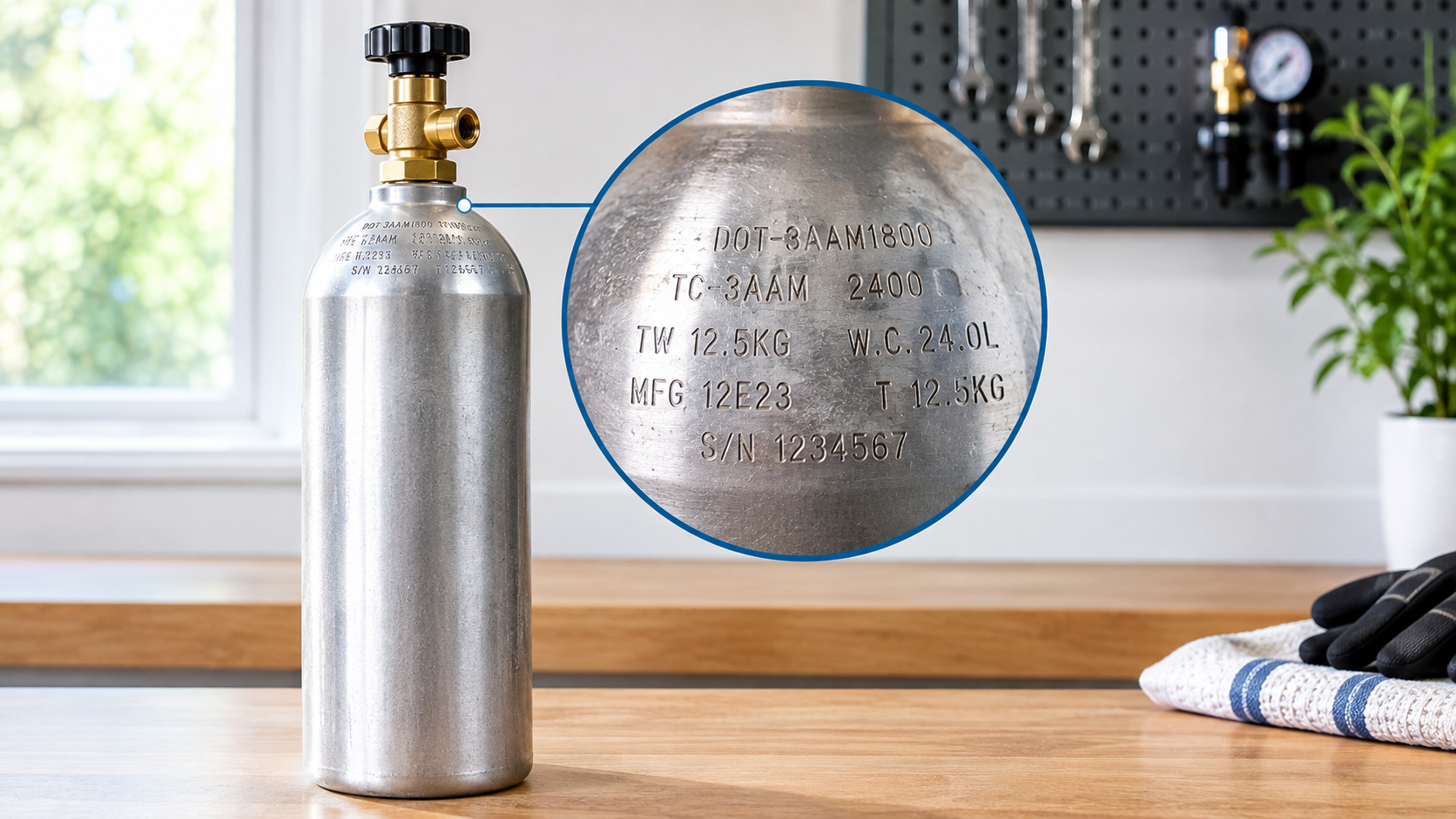
Not sure whether you have a 5 lb, 10 lb, 20 lb or another size CO₂ cylinder? You may be able to find useful information by looking at the markings stamped into the cylinder.
CO₂ cylinders are used for many applications, including kegerators and home brewing, soda and beverage carbonation, planted aquariums, fire extinguishers, welding and commercial applications. But identifying the size of a cylinder isn't always as simple as looking at it.
Here's what the most common CO₂ cylinder markings mean and what to look for when you're trying to identify your tank.
How Do I Know What Size CO₂ Cylinder I Have?
The first thing to understand is that a CO₂ cylinder's physical size doesn't always tell you its CO₂ capacity.
When people refer to a 5 lb, 10 lb or 20 lb CO₂ cylinder, they're generally referring to the approximate amount of CO₂ the cylinder is designed to hold—not the weight of the empty cylinder.
Start by looking around the shoulder or upper portion of the cylinder. This is where you'll often find important information such as:
Tare weight
Cylinder specification
Manufacturer information
Serial number
Original test markings
Hydrostatic test or requalification markings
These markings can help identify the cylinder and determine whether it is suitable for filling.
What Does Tare Weight Mean on a CO₂ Cylinder?
One of the most useful markings to understand is the tare weight.
Tare weight is the weight of the empty cylinder. It may appear as a marking beginning with a T, followed by a weight in kilograms.
For example, a marking such as:
T 10 kg
indicates an empty cylinder weight of approximately 10 kg.
It's important to remember that tare weight is not the CO₂ capacity. A heavier empty cylinder doesn't automatically mean it holds more CO₂.
What Does "TC" Mean on a CO₂ Cylinder?
If you're in Canada, you may see TC stamped on a cylinder.
TC refers to Transport Canada and is part of the marking system used to identify cylinders manufactured to applicable Canadian requirements.
You may also encounter older markings or cylinders manufactured under other approved specifications. This is one reason the markings on two CO₂ cylinders may look different even when they're used for similar applications.
What Does the Cylinder Specification Mean?
A CO₂ cylinder will typically have a specification or designation stamped into it.
This marking identifies the type of cylinder and the requirements under which it was manufactured and approved.
You may see markings containing combinations of letters and numbers, such as a TC specification on a Canadian cylinder.
For most customers, you don't need to understand every part of the specification. The important thing is that the marking helps identify the cylinder and its requirements.
What Is the Hydro-Test Date?
The hydrostatic test date is one of the most important markings to check on a CO₂ cylinder.
For the CO₂ cylinders covered by this service, hydrostatic testing is required every five years to remain compliant. The test checks the condition of the cylinder and confirms that it can continue to be used.
The test or requalification date tells you when the cylinder was last tested. It does not tell you the size of the cylinder.
If five years have passed since the last required test, the cylinder needs to be requalified before it can be refilled. Transport Canada requires cylinders that are due for requalification to be requalified before filling.
If you're unsure whether your cylinder is due for testing, the markings can be checked before arranging a refill.
Can I Tell the CO₂ Size Just by Weighing the Tank?
Weighing a CO₂ cylinder can provide useful information, but it isn't always enough to determine the cylinder's rated or commonly marketed size.
If you know the cylinder's tare weight, you can subtract that from the total weight of the cylinder to estimate how much CO₂ is inside.
For example:
Total cylinder weight − tare weight = approximate CO₂ contents
This can help you determine how much CO₂ remains in a cylinder, but it doesn't necessarily tell you whether the cylinder is a 5 lb, 10 lb or 20 lb cylinder.
What Are Common CO₂ Cylinder Sizes?
CO₂ cylinders come in a variety of sizes depending on the application.
Common sizes include:
2.5 lb CO₂ cylinders
5 lb CO₂ cylinders
10 lb CO₂ cylinders
20 lb CO₂ cylinders
Larger commercial cylinders
A 5 lb cylinder, for example, is commonly used for home carbonation, kegerators and other smaller CO₂ applications. Larger cylinders may be more practical for businesses or higher-volume applications.
What If My CO₂ Cylinder Doesn't Have All These Markings?
Don't worry if your cylinder doesn't have every marking discussed in this article.
Markings can vary depending on the cylinder's age, manufacturer, specification and intended use. Older cylinders may also have different marking systems than newer Canadian cylinders.
Some markings may be difficult to see because of paint, wear or previous refurbishment.
If you're unsure what you have, the markings that are visible can still provide useful information when the cylinder is inspected.
What About Refurbished or Reconditioned CO₂ Cylinders?
A refurbished or reconditioned CO₂ cylinder may look different from a brand-new cylinder.
The paint, appearance and some markings may show signs of previous use or refurbishment. However, the important cylinder identification and testing information should still be considered when determining whether the cylinder can be filled.
If you're purchasing or bringing in a reconditioned cylinder, make sure the cylinder is appropriate for the intended application and that its required testing is current.
What Should I Look For Before Bringing My CO₂ Cylinder in for a Refill?
Before bringing your cylinder in, take a quick look at the markings around the upper part of the tank.
Look for:
Tare weight
TC or other cylinder specification
Manufacturer information
Serial number
Hydrostatic test or requalification markings
You don't need to figure everything out yourself. If you're unsure about the cylinder size or what the markings mean, having the cylinder inspected can help determine what you have.
Why CO₂ Cylinder Markings Matter
CO₂ cylinder markings aren't just numbers stamped into the metal. They provide important information about the cylinder, including how it was manufactured, its empty weight, its identification and its testing history.
Understanding these markings can make it much easier to identify your CO₂ cylinder and know what information to provide when you're looking for a refill or cylinder service.
Need Help Identifying Your CO₂ Cylinder?
If you're in the Ottawa or Nepean area and aren't sure what size CO₂ cylinder you have, Rapid CO₂ can help.
Rapid CO₂ provides CO₂ cylinder refills and hydrostatic testing for a variety of applications, including kegerators, home brewing, beverage carbonation, planted aquariums, fire extinguishers and commercial or industrial uses.
If you're unsure what your cylinder markings mean or what size cylinder you have, bring the cylinder in for inspection or contact Rapid CO₂ at 613-299-8412.
What to Look For
The easiest place to start when identifying a CO₂ cylinder is the markings stamped into the tank.
Look for the tare weight, cylinder specification, manufacturer and serial information, and hydrostatic test or requalification markings. Remember that a 5 lb, 10 lb or 20 lb designation refers to the approximate CO₂ capacity—not the weight of the empty cylinder.
Also check the hydrostatic test date. For the CO₂ cylinders covered by this service, testing is required every five years to remain compliant.
If you're still unsure what size CO₂ cylinder you have, getting it properly identified before arranging a refill can save you time and help ensure you get the right service for your cylinder.
