
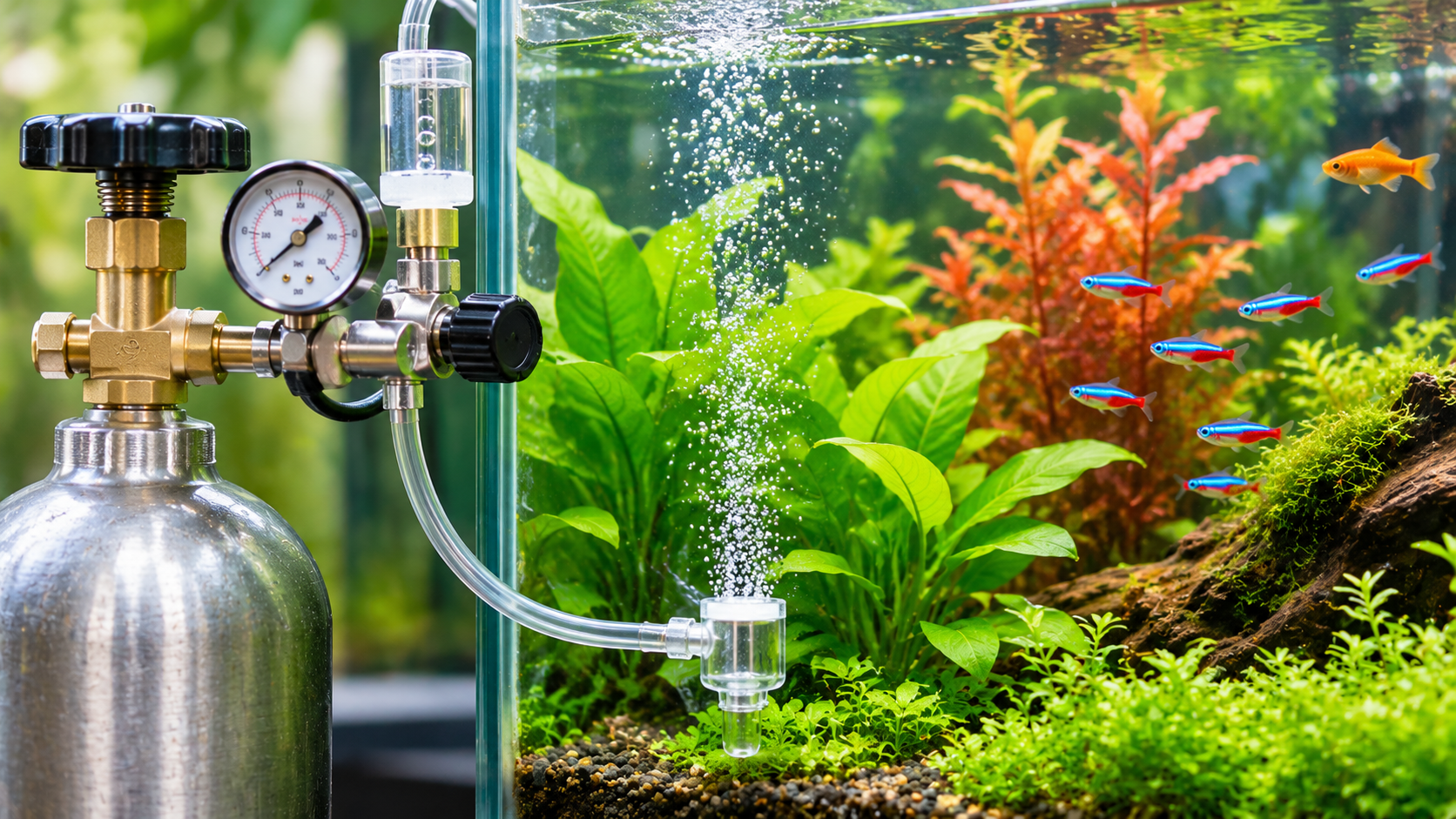
Want a fish tank filled with lush green plants, vibrant colours, and a beautiful underwater landscape? Adding CO₂ to a planted aquarium can help you achieve the look you're after.
Carbon dioxide (CO₂) is an essential ingredient in plant growth. While every aquarium contains some naturally occurring CO₂, adding a controlled supply can make a noticeable difference in tanks with demanding aquatic plants or stronger lighting.
But is CO₂ worth adding to your fish tank? Here are the main benefits, what you can expect, and what to consider before getting started.
1. Faster Growth for Aquarium Plants
One of the biggest benefits of CO₂ for a planted fish tank is faster plant growth.
Aquatic plants use carbon dioxide, light, and nutrients to carry out photosynthesis. When one of these essential ingredients is in short supply, plant growth can become limited.
Supplemental CO₂ helps provide the carbon plants need to grow, especially in aquariums with strong lighting and regular fertilization.
Depending on the plant species and aquarium conditions, you may notice:
New leaves appearing more quickly.
Fuller, denser plant growth.
Faster spreading of carpeting plants.
More vigorous growth in demanding plant varieties.
If you want your aquarium plants to fill out rather than remain small and sparse, supplemental CO₂ can help create the conditions they need.
2. A Fuller, More Vibrant Aquascape
CO₂ can also help you create a more impressive planted aquarium.
Aquascaping involves arranging plants, rocks, driftwood, and other features to create an attractive underwater landscape. Healthy plant growth makes it easier to achieve the look you want, whether you prefer a lush green aquarium or a carefully designed layout.
With appropriate CO₂, lighting, and nutrients, some plants can develop fuller foliage, more compact growth, and stronger colour.
Certain plant species, including some red aquatic plants, can also display more intense colours under suitable growing conditions.
The result can be a more established-looking aquarium with plants that fill their intended spaces.
3. More Options for the Plants You Can Grow
Not every aquarium plant has the same requirements.
Hardy plants such as Java fern and Anubias can often grow successfully without supplemental CO₂. Other species, particularly demanding carpeting plants and some fast-growing varieties, may be much more difficult to maintain without it.
Adding CO₂ gives aquarists more flexibility when choosing plants.
It can be particularly useful if you want to:
Grow a carpet of low-growing aquatic plants.
Maintain a densely planted aquarium.
Grow plant varieties that need more demanding conditions.
Create a detailed aquascape with several types of aquatic plants.
CO₂ doesn't guarantee success with every plant. Lighting, substrate, nutrients, water conditions, and the plant's individual needs still matter.
However, a well-managed CO₂ system can make certain planting projects much more achievable.
4. Better Support for High-Light Aquariums
Stronger aquarium lighting can encourage faster plant growth, but more light also increases the demand for carbon and other nutrients.
If you increase lighting without providing enough CO₂ and nutrients, plant growth may not keep pace with the available light. This imbalance can contribute to plant stress and algae problems.
Supplemental CO₂ can help plants make better use of stronger lighting when the rest of the aquarium is properly balanced.
This is one reason CO₂ injection is popular among aquarists who want a high-growth planted tank rather than a slower-growing, low-maintenance setup.
CO₂ alone does not prevent algae. Consistent CO₂ levels, suitable lighting, balanced nutrients, and regular aquarium maintenance all play a role.
5. Supporting a Healthy Planted Aquarium
Live aquatic plants can contribute to a healthy aquarium by taking up nutrients and producing oxygen during photosynthesis.
When plants receive enough light and have access to the carbon and nutrients they need, they can grow more vigorously. This may help them compete with algae for available resources and contribute to nutrient uptake within the aquarium.
However, adding CO₂ does not automatically improve water quality or make an aquarium safer for fish. Filtration, biological cycling, appropriate stocking, water changes, and proper feeding remain essential.
The goal is to create a balanced environment where plants, fish, and beneficial microorganisms can thrive together.
Does CO₂ Help Fish in an Aquarium?
CO₂ is primarily added to a fish tank to support aquatic plant growth, rather than because the fish themselves need extra carbon dioxide.
A well-maintained planted aquarium can provide shelter, natural cover, and a more complex environment for fish. Healthy plants may also contribute to oxygen production during periods of light.
However, too much dissolved CO₂ can be dangerous to fish and other aquatic animals. Excessive concentrations can interfere with normal respiration, while changes in CO₂ can also affect aquarium pH.
A fish tank should never be dosed with CO₂ simply to increase the amount of gas in the water. The supply must be controlled according to the aquarium's needs, with fish behaviour and water conditions monitored closely.
If fish begin gasping at the surface, breathing rapidly, or behaving unusually after CO₂ is introduced, shut off the CO₂ supply, increase aeration or surface agitation, and take immediate steps to correct the problem.
Does Every Fish Tank Need CO₂?
No. Supplemental CO₂ is not necessary for every aquarium.
A tank with fish and a few hardy, slow-growing plants may do perfectly well using naturally available CO₂. These setups can be easier to maintain and may be a better choice for beginners.
A pressurized CO₂ system is more likely to be worthwhile if you want:
Dense, fast-growing aquatic plants.
A lush carpet of foreground plants.
A high-light aquascape.
More demanding plant species.
Greater control over plant growth and aquascaping results.
Before investing in CO₂ equipment, consider the plants you want to grow, your lighting, your budget, and how much time you're willing to spend maintaining the aquarium.
What Equipment Do You Need to Add CO₂ to a Fish Tank?
A pressurized aquarium CO₂ system generally includes a CO₂ cylinder, a compatible regulator, suitable gas tubing, a delivery device such as a diffuser, and equipment to monitor CO₂ levels.
Depending on the setup, a solenoid valve and timer can help coordinate CO₂ delivery with the aquarium lighting schedule.
For reliable results, the system should deliver CO₂ consistently and allow you to control the amount entering the aquarium. Introduce CO₂ gradually, monitor the tank, and avoid making large changes without checking how your fish respond.
CO₂ injection is normally used while the aquarium lights are on, when plants can use the gas for photosynthesis. A properly configured shut-off system can help prevent unnecessary CO₂ accumulation when the lights are off.
Always secure the cylinder upright, use compatible pressure-rated equipment, and follow the equipment manufacturer's instructions.
Where to Get CO₂ Refills for Your Aquarium
If you're planning to add supplemental CO₂ to a planted fish tank, a dependable supply is an important part of keeping your system running consistently.
Rapid CO₂ provides CO₂ cylinder refills for planted aquariums, home brewing, beverage dispensing, and other applications. We serve customers throughout Ottawa and Nepean, Ontario.
Whether you're maintaining an established aquascape or starting a new planted aquarium, we can help with your CO₂ refill needs.
Contact Rapid CO₂
74 Auriga Drive, Unit 4, Ottawa, Ontario
Phone: 613-299-8412
Website: https://www.rapidco2.ca/
Is CO₂ Worth It for Your Aquarium?
If your goal is to grow healthy, dense aquatic plants or create a more ambitious aquascape, supplemental CO₂ can make a real difference. It can encourage faster growth, give you more plant choices, and help your aquarium reach its full visual potential.
If you prefer a simple tank with hardy plants and minimal maintenance, you may not need it.
The key is to match your CO₂ supply to your plants, lighting, and aquarium conditions. With the right setup and careful monitoring, CO₂ can be a valuable tool for creating a thriving planted fish tank.
