
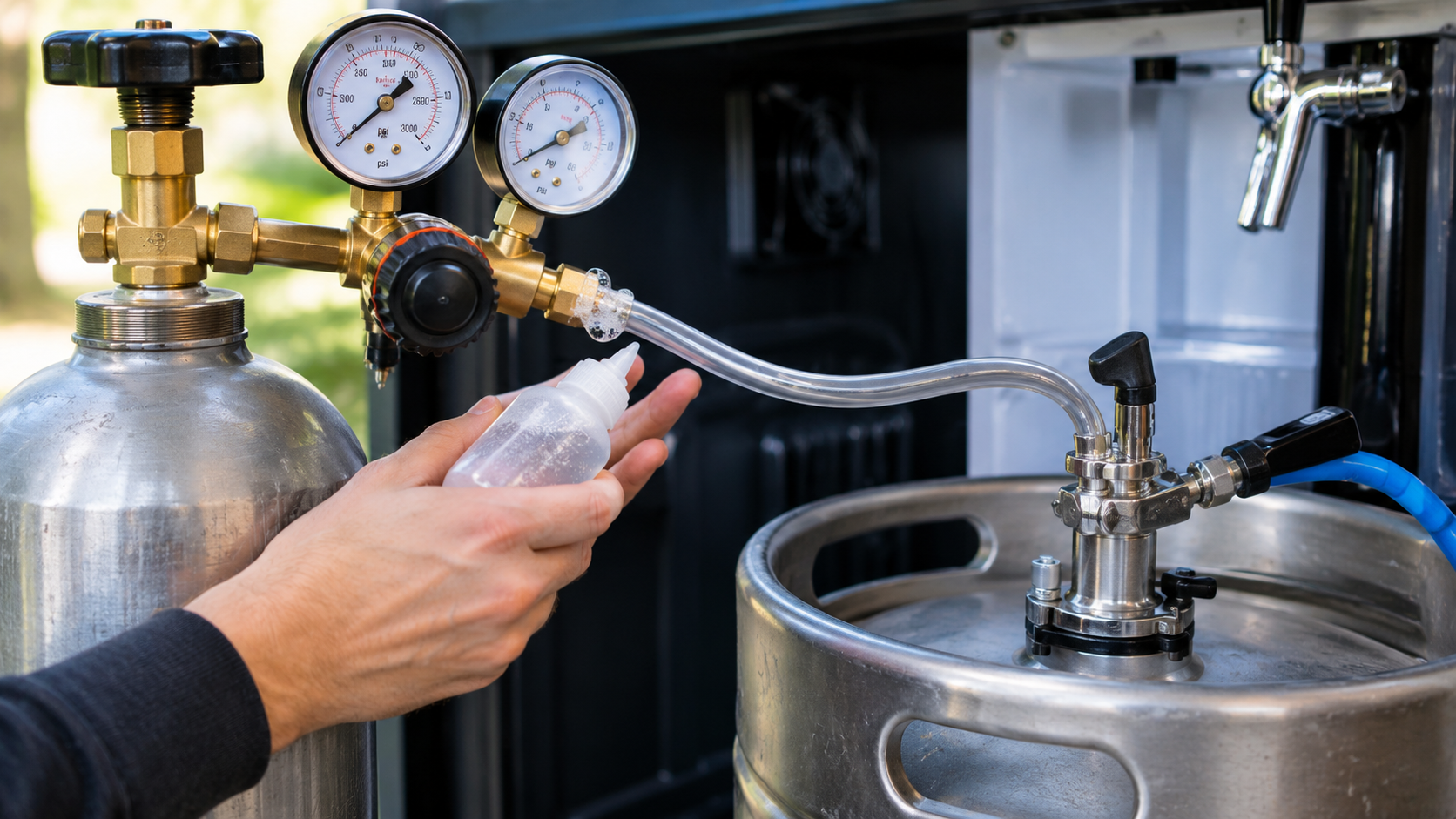
Is your CO₂ tank running out faster than expected? If you're using a kegerator, homebrew keg, or commercial draft beer system, a small CO₂ leak could be wasting gas and costing you money.
CO₂ is essential for carbonating beer and pushing it from the keg to your glass. When gas escapes through a leaking connection, hose, or regulator, your system may struggle to maintain pressure, and you could find yourself needing a refill sooner than expected.
The good news is that you can often find a CO₂ leak with a few simple checks.
Common Signs of a CO₂ Leak in a Kegerator
Not every draft beer problem is caused by a leak, but watch for these common warning signs:
Your CO₂ tank empties too quickly: If your usual cylinder suddenly doesn't last as long, gas may be escaping from the system.
You hear a hissing sound: Escaping CO₂ may make a faint hiss near a fitting, regulator, hose, or keg connection.
Your keg won't maintain pressure: A leak can prevent your system from holding its intended pressure.
Your beer pours flat or foamy: A leak can contribute to carbonation or dispensing problems, although incorrect pressure and beer temperature can cause similar symptoms.
You notice a leak after changing your CO₂ tank: A regulator connection or seal may not be seated correctly.
If your CO₂ tank is emptying too fast, check for leaks before assuming you simply need a larger cylinder or more frequent refills.
How to Find a CO₂ Leak in Your Keg Setup
The easiest place to start is with the external connections between your CO₂ cylinder and keg. A suitable leak detection solution can help you identify escaping gas, even when you cannot hear it.
1. Check the CO₂ Tank and Regulator Connection
The connection between your CO₂ cylinder and regulator is one of the first places to inspect.
Look for a worn or missing sealing washer, a damaged fitting, or a connection that isn't seated properly.
With the system pressurized according to the manufacturer's instructions, apply a compatible leak detection solution to the external connection. If bubbles continue to grow, gas is escaping.
2. Inspect the CO₂ Regulator
Your CO₂ regulator controls the pressure supplied to your keg. Inspect its accessible fittings and connections for signs of leakage.
Apply leak detection solution to compatible external joints and watch for growing bubbles.
If you suspect a leak from inside the regulator, its relief valve, or its body, stop using it and have it inspected or replaced as appropriate. Never dismantle a pressurized regulator.
3. Check CO₂ Gas Lines and Hoses
Follow the gas line from the regulator to the keg. Look for cracked, damaged, or deteriorating hoses and loose connections.
Pay particular attention to hose ends, clamps, manifolds, and other fittings. Use leak detection solution on compatible external connections to check for escaping gas.
Replace damaged hoses with tubing rated for your system's operating pressure. Avoid improvised repairs that could compromise the gas line.
4. Inspect the Keg Coupler and Seals
The keg coupler connects your gas supply and beer line to the keg. Worn O-rings, damaged seals, or an improperly seated connection can allow CO₂ to escape.
Inspect accessible seals and connections for wear. If you find a leak, shut off the CO₂ supply before servicing the connection, and replace damaged components with compatible parts.
5. Check Additional Valves and Connections
If you haven't found the leak, inspect other gas-line connections, shut-off valves, and distribution manifolds, if present.
Check one area at a time so you can identify the source instead of tightening or replacing parts unnecessarily.
Always follow the manufacturer's instructions for testing and servicing your equipment.
How to Confirm a Suspected CO₂ Leak
If you suspect a leak but can't hear escaping gas, a controlled pressure check may provide additional information.
With the system configured according to the manufacturer's instructions, monitor the pressure under stable conditions. A falling pressure reading may indicate a leak, but temperature changes and equipment behaviour can also affect the result.
A pressure reading alone won't tell you where a leak is located. Checking accessible connections with a suitable leak detection solution is a more direct way to pinpoint escaping gas.
Never loosen a pressurized fitting to test for a leak or release pressure.
How to Prevent CO₂ Leaks in a Kegerator
Regular inspection can help prevent wasted CO₂ and unexpected interruptions to your draft beer system.
Check hoses, fittings, and seals periodically.
Replace worn or damaged components promptly.
Use compatible fittings and pressure-rated gas lines.
Avoid overtightening connections, which can damage threads and seals.
Check for leaks after changing a cylinder or servicing a connection.
Keep your CO₂ cylinder upright and secured in a suitable, ventilated location.
Shut off the cylinder valve when the system will be unused for an extended period, following the manufacturer's instructions.
CO₂ is colourless and odourless, so you cannot rely on smell to detect a leak. In an enclosed area, escaping CO₂ can displace oxygen. If you suspect a significant leak, leave the area and seek appropriate assistance.
Never use a flame to locate a CO₂ leak.
When Should You Refill Your CO₂ Tank?
Once you've checked for leaks and repaired any problems, you may still need a refill if your cylinder is empty.
The amount of CO₂ your system uses depends on factors such as how much beer you dispense, how many kegs you operate, and whether you also use CO₂ for carbonation.
If you're unsure which cylinder size is right for your setup, read our guide to CO₂ Cylinders for Home Brewing and Keg Taps. It explains common cylinder sizes and how CO₂ supports carbonation and dispensing.
CO₂ Refills in Ottawa and Nepean
If your kegerator or draft beer system needs more CO₂, Rapid CO₂ provides CO₂ cylinder refills for home brewing, kegerators, restaurants, and other beverage dispensing applications.
Visit Rapid CO₂ in Ottawa for your next refill. We serve customers throughout Ottawa and Nepean, helping home brewers and businesses keep their CO₂ supplies ready when they need them.
Looking for more information? Read our complete guide to CO₂ refills in Ottawa.
Rapid CO₂
74 Auriga Drive, Unit 4 (back of building), Ottawa, Ontario
Phone: 613-299-8412
Website: rapidco2.ca
Before arranging a refill, check that your cylinder is in suitable condition and has a valid test date where required.
A little troubleshooting can help you stop wasting CO₂, keep your keg system working properly, and enjoy your next pour.
