
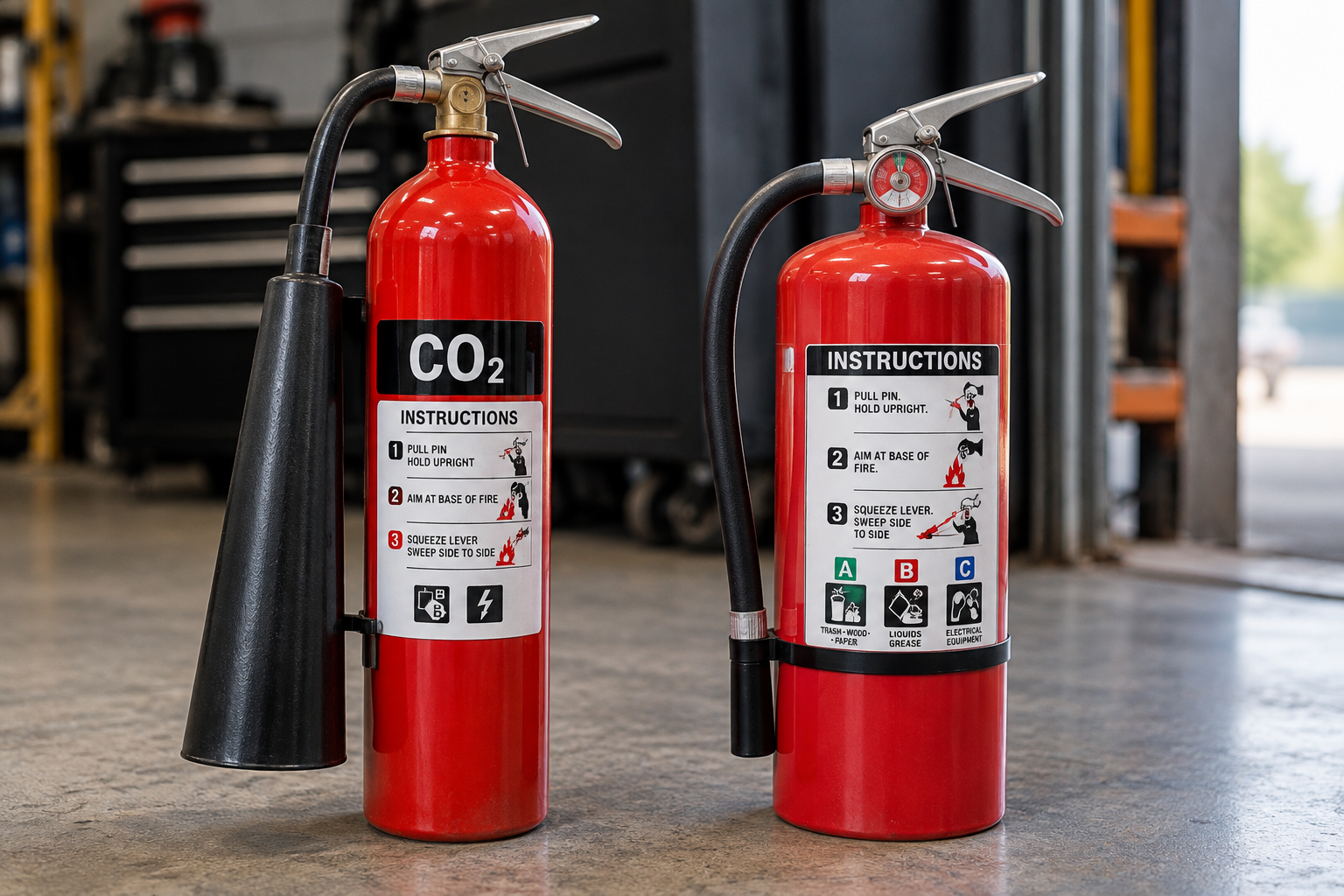
A fire extinguisher is one of those things you hope you never need—but if a small fire starts in your home, having the right extinguisher nearby could make a difference.
Whether you're looking for a fire extinguisher for your home, replacing an older unit or wondering whether the extinguisher in your garage is still usable, there are a few important things every homeowner should know.
Why Have a Fire Extinguisher at Home?
Small fires can start in kitchens, garages, workshops, laundry rooms and around electrical equipment. A properly selected fire extinguisher can help put out a small, contained fire when it is safe to do so.
However, a fire extinguisher is not a substitute for working smoke alarms or a home fire escape plan.
If a fire is spreading, there is heavy smoke or you cannot safely reach an exit, get out immediately and call 911. Never put yourself or your family at risk trying to save property.
What Type of Fire Extinguisher Is Best for a Home?
For many households, an ABC fire extinguisher is a practical choice because it covers several common types of fires.
The letters refer to the following:
Class A: Ordinary materials such as wood, paper, cardboard and cloth.
Class B: Flammable liquids such as gasoline and oil.
Class C: Fires involving energized electrical equipment.
An ABC extinguisher provides broad protection for common household fire risks. Look for a recognized certification mark, such as ULC, and choose a model you can comfortably lift and operate.
The right extinguisher will depend on where you plan to keep it and the potential fire risks in that area.
What About a CO₂ Fire Extinguisher?
CO₂ fire extinguishers are designed primarily for Class B and electrical fires. Unlike ABC extinguishers, they discharge carbon dioxide rather than dry chemical powder, leaving little or no powdery residue.
This can make them useful around certain electrical equipment, workshops and other suitable applications.
However, CO₂ extinguishers are not intended for ordinary combustible fires involving materials such as wood, paper and cloth. They can also be less effective outdoors or in drafty areas because the gas can disperse quickly.
For general home protection, an ABC extinguisher is often the more versatile choice. A CO₂ extinguisher may be appropriate for a specific area or risk, but it is not a direct replacement for an ABC unit.
If you're unsure which type is suitable for your home, garage or workshop, ask a fire extinguisher professional for guidance.
Where Should You Keep a Fire Extinguisher?
A fire extinguisher is only useful if you can reach it quickly.
Keep it in a visible, accessible location, preferably near an exit or escape route. Follow the manufacturer's instructions for mounting and storage.
Depending on your home, you may want an extinguisher near the kitchen and another in the garage or workshop.
Avoid placing your only kitchen extinguisher right beside the stove, where a cooking fire could prevent you from reaching it. You should never have to move closer to a fire to get your extinguisher.
How Do You Use a Fire Extinguisher?
Many portable fire extinguishers can be operated using the P.A.S.S. method:
P – Pull the safety pin.
A – Aim the nozzle at the base of the fire.
S – Squeeze the handle.
S – Sweep from side to side across the base of the flames.
Only attempt to extinguish a fire if it is small and contained, you know how to operate the extinguisher, and you have a clear escape route behind you.
If the fire does not go out quickly, leave immediately. Make sure everyone is safely outside and call 911.
When Should You NOT Use a Fire Extinguisher?
Knowing when not to fight a fire is just as important as knowing how to use an extinguisher.
Get out immediately if:
The fire is spreading quickly.
Smoke is filling the room.
The fire is blocking your exit.
You are unsure how to operate the extinguisher.
You feel unsafe for any reason.
Never re-enter a burning building for belongings or pets.
Kitchen fires also require special care. Never move a burning pan or use water on a grease fire. A suitable lid may help smother a small pan fire if you can do so safely, but if the fire is spreading or you are in doubt, evacuate and call 911. Not every extinguisher is suitable for every cooking-oil fire.
How Often Should You Check Your Fire Extinguisher?
Even if an extinguisher has never been used, it should not be forgotten in a cupboard or on a garage wall.
Check it regularly and follow the manufacturer's instructions. Look for:
Visible damage, corrosion or leakage.
A missing safety pin or broken tamper seal.
A blocked nozzle or damaged hose.
A pressure gauge, where fitted, that is outside its recommended range.
Missing or unreadable instructions and labels.
Signs that the extinguisher has been used.
Make sure the extinguisher remains easy to access and is suitable for the area it is intended to protect.
If it has been discharged, even partially, it will generally need servicing or replacement before it can be relied upon again.
Does Your Fire Extinguisher Need Hydrostatic Testing?
Hydrostatic testing checks whether a pressurized extinguisher cylinder can safely withstand pressure. It is different from a routine visual inspection or regular servicing.
The required testing interval depends on the type of extinguisher—not simply whether it is used in a home or commercial building.
For example, CO₂ fire extinguishers generally require hydrostatic testing every five years under the applicable NFPA 10 standard. Many common stored-pressure dry-chemical ABC extinguishers have a 12-year hydrostatic testing interval. Other extinguisher types may have different requirements.
The rules that apply to commercial buildings should not automatically be treated as legal requirements for every private residence. Nevertheless, homeowners should follow the manufacturer's instructions and have their extinguishers checked or serviced when needed.
If you have an older extinguisher and are unsure of its history, type or testing date, have it assessed by a qualified fire extinguisher service provider rather than guessing.
Should You Buy a New or Reconditioned Fire Extinguisher?
A new extinguisher is not always the only option. Depending on your needs, a professionally reconditioned extinguisher may be a practical alternative.
The important thing is to choose the correct type and ensure it has been properly inspected and serviced.
Rapid CO₂ offers new and reconditioned ABC fire extinguishers, CO₂ fire extinguisher sales and service, specialty fire extinguishers, pressurized water units, and fire extinguisher servicing and testing.
You can learn more about available services at rapidco2.ca/services.
Fire Safety Starts Before a Fire
The best time to prepare for a fire is before one happens.
Make sure your home has working smoke alarms, everyone knows the escape plan, and your fire extinguisher is appropriate for the area, accessible and properly maintained.
A fire extinguisher can be a useful part of your home's fire safety plan, but protecting people always comes first.
Need a Fire Extinguisher for Your Home in Ottawa or Nepean?
Rapid CO₂ provides fire extinguisher sales and service in Ottawa and Nepean, including new and reconditioned ABC extinguishers, CO₂ extinguishers, specialty units and pressurized water extinguishers.
If you're unsure which extinguisher is right for your home or have an older unit that needs attention, contact Rapid CO₂ at 613-299-8412.
Visit rapidco2.ca to learn more about our services.
